From Sojat
Why Sojat grows the world's best henna
The soil, the heat and three generations of know-how — what makes one district in Rajas...
Read

The single molecule behind henna's colour and shine, explained simply — and why pure leaf is gentler than any box dye.
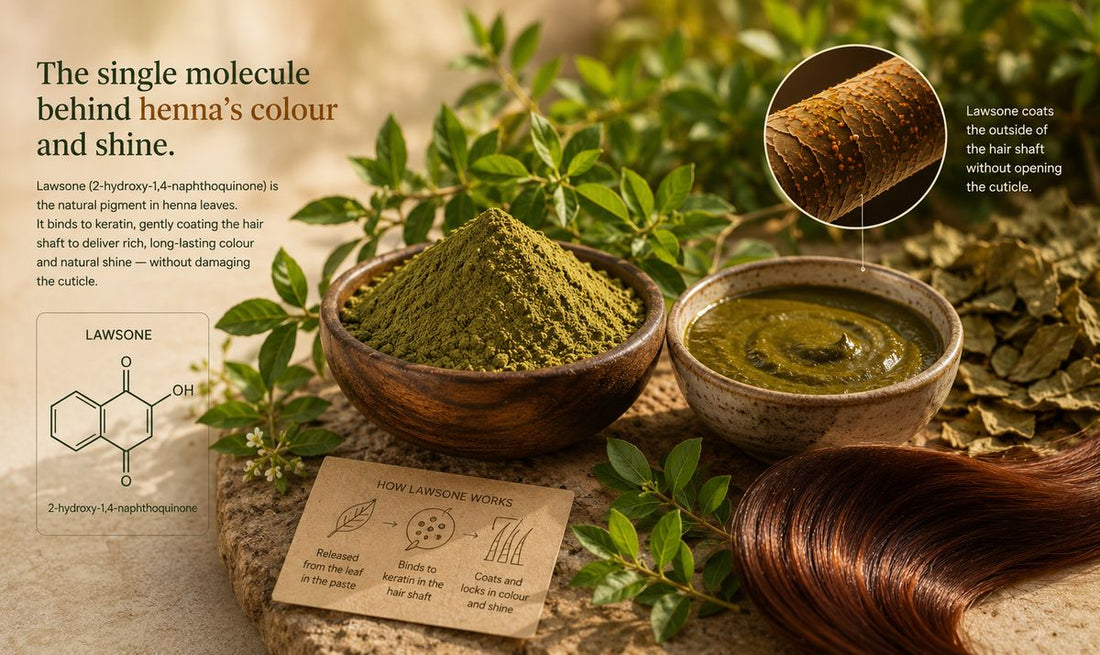
Henna does only one chemical trick — but it does it beautifully. Understand the molecule behind it, and you understand why a plant outperforms most of what's sold in a box.
That molecule is lawsone (2-hydroxy-1,4-naphthoquinone, if you like the long version). It's a natural reddish-orange pigment that the henna plant produces and stores in its leaves. Everything henna is famous for — the colour, the gloss, the way it builds over time — traces back to how lawsone behaves once it meets your hair.
In a fresh leaf, lawsone sits locked inside the plant's tissue, bound up and inactive. When the leaf is dried and milled into powder and then mixed with a mild liquid, the molecule is gradually freed — this is the “dye release” you wait for when you let a paste rest. Only once it's released and dissolved is lawsone able to do its job.
This is also why freshness and source matter so much. Lawsone content varies by where and how the plant is grown, and it degrades with heat, light and age. Stronger leaf, freshly handled, simply carries more usable dye — the reason origin is worth caring about at all.
Here's the part that sets henna apart. Lawsone has a natural affinity for keratin, the protein your hair is made of. When released paste sits against your hair, lawsone molecules migrate into the outer layer and bind to the keratin there, depositing colour as they go.
Henna wraps the hair in colour. Chemical dye cracks it open to inject colour. That difference is everything.
Crucially, henna works without forcing the hair's cuticle open. A conventional permanent dye uses ammonia (or a similar alkali) to swell and lift the cuticle, then peroxide to strip existing pigment, then a developer to build new colour inside. Henna does none of that. It binds to the surface layer and coats the strand, which is why it's so much gentler to use again and again.
Freshly rinsed henna often looks bright, even coppery. Over the next 24–48 hours it darkens and settles into its true tone. That's lawsone oxidising — reacting slowly with air as it locks into place. It's the same reason you're told not to shampoo straight away: you're giving the colour time to finish developing.
Because lawsone binds along the outside of the strand, it leaves behind a fine coating. In cosmetic terms, that coating tends to smooth the cuticle, add shine and make hair feel thicker and easier to manage. People often notice their hair looks glossier and feels more substantial after henna — that's the coating at work, not a chemical change to the hair's structure.
Henna is wonderful, but it isn't magic, and a brand worth trusting will tell you so:
If you want to put this into practice, our guide to mixing henna for the richest colour is the natural next read — it's all about getting the most lawsone out of your paste and onto your hair.
Single-origin Sojat henna — 100% pure leaf, nothing added, batch-coded for freshness.
Shop Pure Sojat HennaOne plant, one molecule, one honest job done well. That's the quiet genius of henna — and the reason it has outlasted every chemical shortcut invented to replace it.

The soil, the heat and three generations of know-how — what makes one district in Rajas...

Water temperature, resting time and the one step most people skip. A foolproof method f...

Skip the chemical dye. Here's how to layer henna and indigo, in the right order, for de...
Herbal hair tips, restock alerts and members-only offers — no clutter, just the good stuff.