How-to
सफेद बालों में मेहंदी कैसे लगाएं: समय, तरीका और सही मेहंदी
सफेद बालों पर सिर्फ मेहंदी से तांबे जैसा रंग आता है। भूरे या काले रंग के लिए मेहंदी 3–4...
Read

Water temperature, resting time and the one step most people skip. A foolproof method for colour that deepens for days.
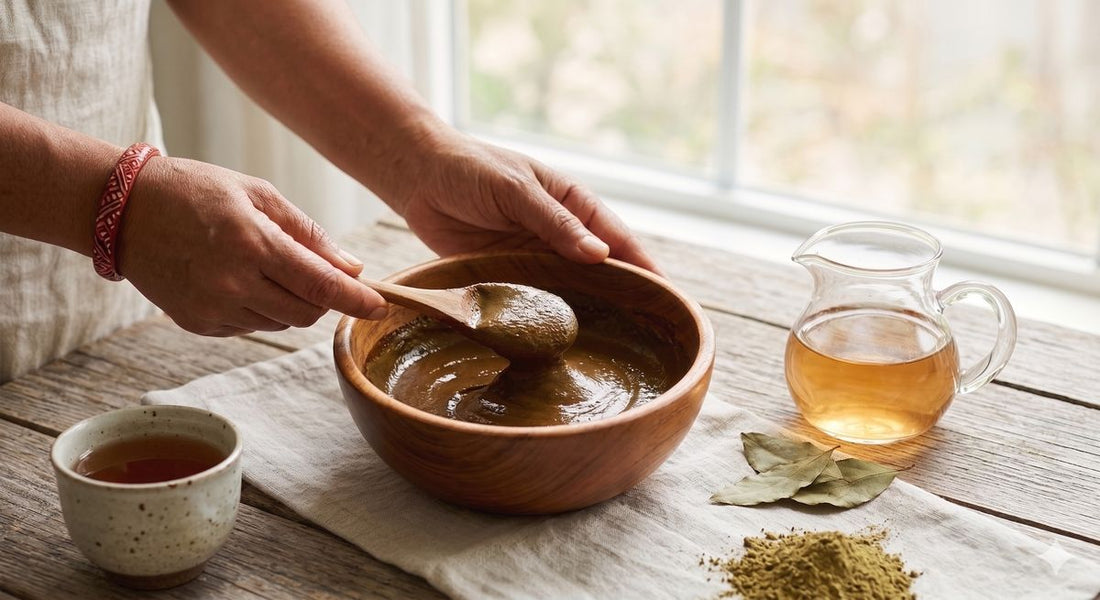
To mix henna for hair, add warm water (or cooled weak tea) to pure henna powder a little at a time until the paste is as thick as yoghurt, about 200 to 300 ml per 100 g. Cover it and rest it 2 to 4 hours until the dye releases, then apply for 1 to 3 hours. Resting the paste is the step that decides how rich the colour is.
Henna colours hair through lawsone, a molecule locked inside the dried leaf. Mixing is about releasing that dye before the paste touches your hair. This guide assumes pure, single-ingredient henna; if you are not sure yours is pure, read how to read a henna label first.
| Hair length | Henna powder | Liquid (approx.) |
|---|---|---|
| Short (chin length or above) | 100 g | 200–300 ml |
| Shoulder length | 150–200 g | 300–600 ml |
| Mid-back | 250–300 g | 500–900 ml |
| Waist length | 400 g or more | 800 ml or more |
| Roots-only touch-up | About half your usual amount | Same ratio |
Henna to water ratio: roughly 200 to 300 ml of liquid for every 100 g of powder. Add it gradually and stop when the paste passes the yoghurt test below. Thick or porous hair may need a little more paste.
| Liquid | What it does | Choose it when |
|---|---|---|
| Warm water | Gentlest; clean dye release | Most people; dry hair |
| Cooled weak black tea | Slightly warmer, deeper tone | You want a richer brown-red |
| Cooled coffee | A touch of extra warmth | Dark hair, deeper result |
| Water with a little lemon | Mild acidity can speed release | Oily hair only; too much acid can dry hair |
Stir the liquid in slowly. You want a smooth paste like thick yoghurt or cake batter: thick enough to stay on your hair, loose enough to spread. Too runny, add powder; too stiff, add a few drops of liquid.
Cover the bowl and leave it somewhere warm: 2 to 4 hours in a warm room, longer in a cool one. The top darkens as the dye releases. To test, dab a little on your palm for a minute and wipe it off: an orange stain means it is ready.
If you only remember one thing: rest the paste. Dye release is where rich colour is made.
A teaspoon of light oil or a spoon of yoghurt stirred in just before applying makes the paste creamier and easier to rinse. Amla powder softens the red towards a cooler brown. Keep add-ins minimal.
Rinse with plenty of water until it runs clear and skip shampoo for 24 hours. Henna deepens as it oxidises, so bright copper at rinse-out settles into its true shade by day two. Wondering about the orange? See does henna turn hair orange.
Henna alone gives copper to reddish-brown. For brown to natural black, follow henna with indigo in the two-step method. For greys, see henna and indigo for grey hair.
Use warm water, comfortably warm to the touch. Boiling water is not needed and makes the paste harder to handle. Cold water works too but releases dye more slowly, so rest it longer.
About 200 to 300 ml of liquid per 100 g of henna powder, added gradually until the paste is as thick as yoghurt.
Yes. Cooled tea or coffee can replace water and adds a little warmth. The colour still comes from the henna, so start with pure leaf powder.
Usually 2 to 4 hours in a warm room, longer in a cool one, until a palm test leaves an orange stain.
Use it the same day once it has released. Leftover released paste can be frozen in a sealed bag and thawed at room temperature for the next session.
Avoid metal bowls that react, chemical hair colour, and any 'henna' that already contains PPD or metallic salts. Pure henna needs nothing more than liquid.
Triple-sifted, single-origin Sojat henna: fine enough to mix smooth in minutes, with a batch number on every pack.
Shop Natural Henna
सफेद बालों पर सिर्फ मेहंदी से तांबे जैसा रंग आता है। भूरे या काले रंग के लिए मेहंदी 3–4...

The PPD-free way to colour grey hair brown or black is henna first, then indigo. A comp...

Yes, with pure henna: wait 2 to 4 weeks after chemical dye or bleach and strand-test fi...
Herbal hair tips, restock alerts and members-only offers — no clutter, just the good stuff.