From Sojat
Why Sojat grows the world's best henna
The soil, the heat and three generations of know-how — what makes one district in Rajas...
Read

Not all “henna” is henna. The words to look for — and the ones that should make you put the pack down.
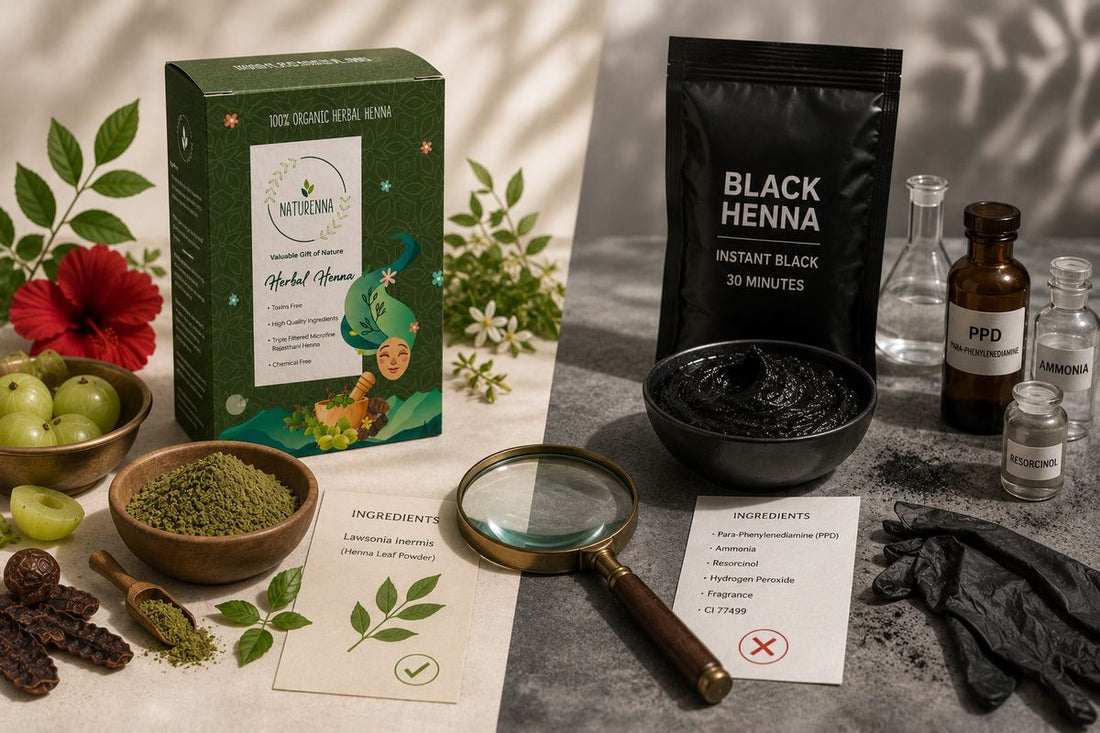
The word “henna” on the front of a pack tells you almost nothing. What you really want is on the back, in the small print — and learning to read it takes about a minute.
Pure henna is one of the safest ways to colour hair. But plenty of products borrow the name while hiding ingredients that pure henna would never contain. The difference matters for your hair and, in some cases, for your skin. Here's how to tell real from imposter.
Genuine henna is the dried, milled leaf of Lawsonia inermis — nothing else. It gives a warm reddish-brown and, as we explain in what lawsone does to your hair, it can't produce black on its own. So when a single packet promises “instant jet black in 30 minutes,” that colour is coming from something other than henna.
PPD (para-phenylenediamine) is a synthetic dye chemical used to create fast, dark colour. It's common in conventional hair dyes and in so-called “black henna,” where it's added to a henna base to make it stain black quickly. PPD is a well-documented contact allergen: in sensitive people it can cause skin reactions, and those reactions can become more severe with repeated exposure. Real, pure henna contains no PPD at all.
If a “henna” turns hair black fast, assume it isn't pure henna until the label proves otherwise.
Put the pack down — or at least ask questions — if you see any of these:
These are the signs of the real thing:
Even with pure, single-ingredient henna, a patch test is good practice — especially the first time you use any new product, and essential for anything you're unsure about:
If you ever notice a reaction to any hair product, stop using it and seek advice from a qualified professional. Pure henna is gentle for most people — but your skin is yours, and a two-minute test is always worth it.
Purity isn't a slogan you can verify by trusting a brand's tone of voice. It's something a label either proves or doesn't. The reason we keep our ingredient lists to a single plant, print a batch and date on every pack, and source from a single origin is precisely so you can check — rather than take our word for it. That's also the thinking behind sourcing at the origin in Sojat.
Naturenna henna is 100% Lawsonia inermis — no PPD, no metallic salts, batch-coded and dated.
See the label, shop the hennaOnce you know what to look for, you'll never read a hair-care label the same way again — and that's a good thing. The fewer surprises in the pack, the better for your hair.

The soil, the heat and three generations of know-how — what makes one district in Rajas...

Water temperature, resting time and the one step most people skip. A foolproof method f...

The single molecule behind henna's colour and shine, explained simply — and why pure le...
Herbal hair tips, restock alerts and members-only offers — no clutter, just the good stuff.