From Sojat
Why Sojat grows the world's best henna
The soil, the heat and three generations of know-how — what makes one district in Rajas...
Read

Patchy colour, dryness, an orange tinge, a greenish black — the eight usual culprits and the simple fix for each.
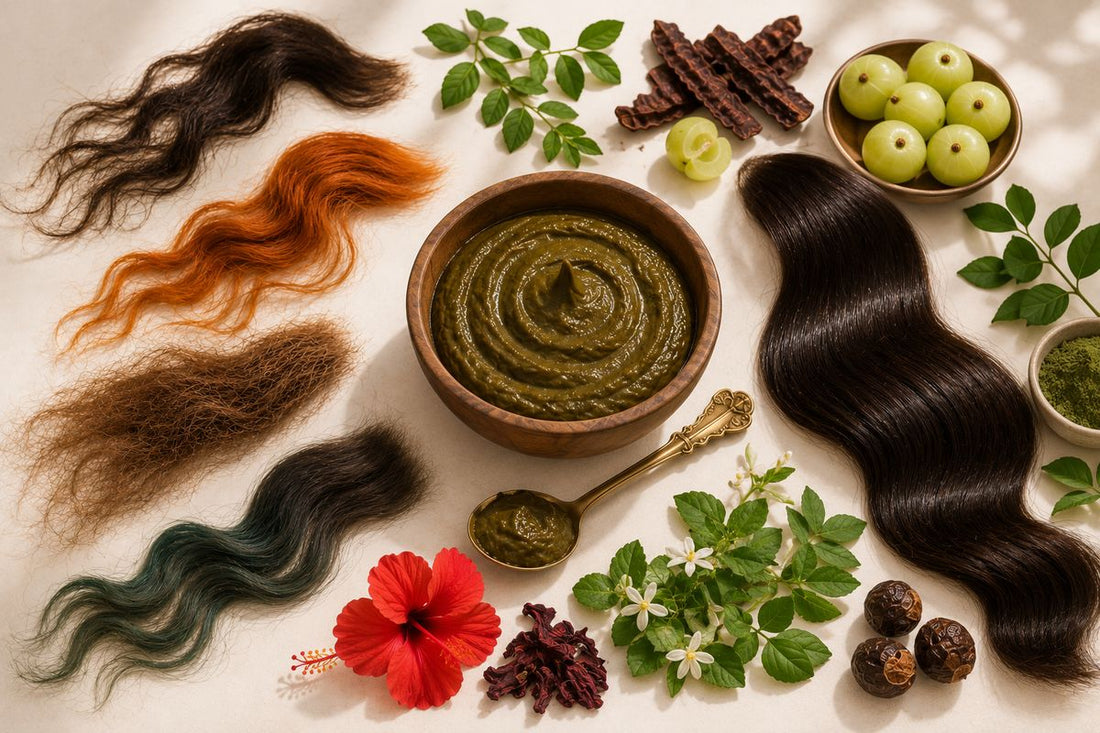
Almost every henna disappointment comes down to one of a handful of small, fixable slips — not the henna itself. Here's how to spot what went wrong and put it right next time.
Henna is forgiving, which is part of its charm: there's no bleaching to undo and no permanent damage to repair. Most problems are about technique, and most have a one-line fix. Find yours below.
Why: the usual cause is an application gap — sections missed, or not enough paste so some strands got barely coated.
Fix: work in smaller sections and use more paste than feels necessary, coating each strand fully from root to tip. Keep the paste at a yoghurt-like consistency so it spreads evenly — full method in how to mix henna.
Why: freshly rinsed henna is meant to look bright and coppery — it deepens as it oxidises. If it stays too light, the paste may have been thin, left on too briefly, or applied to a light base.
Fix: wait the full 48 hours before judging the colour. To deepen it, repeat the application (colour builds with each round) or follow with indigo using the two-step method.
Why: the first application is always the lightest, and fading is worse if you skipped the resting step or shampooed too soon.
Fix: always rest the paste for dye release, rinse with water only, and skip shampoo for 24–48 hours. Then keep going — henna stabilises and richens over two or three cycles.
Why: usually too much acidic liquid (heavy on the lemon), applying too often, or no conditioning add-in.
Fix: mix with plain warm water or weak tea instead of lots of acid, stir a teaspoon of light oil or a spoon of yoghurt into the paste, and space out your applications. An amla ritual on the off-weeks restores gloss beautifully.
Why: indigo applied without enough henna base, or indigo paste that sat too long before use.
Fix: always henna first to lay the base, then apply freshly mixed indigo within about 10–15 minutes. The full sequence is in henna then indigo.
Why: either the dye never released, or the henna itself was old or low quality. Lawsone fades with age, heat and light, so stale leaf simply has less colour to give — the reasoning behind what lawsone does and why freshness matters.
Fix: rest the paste properly and test for dye release before applying. And start with fresh, high-quality, single-origin leaf — check it's pure using how to read a label.
Why: no barrier and no gloves.
Fix: dab oil or balm along your hairline and ears before applying, wear gloves, and lay down an old towel. Any skin stains fade within a day or two on their own.
Why: paste mixed too thick, or hair left uncovered so it dried before the colour developed.
Fix: aim for a spreadable, yoghurt-like paste, and cover your hair with a cap or film while it works — the warmth and moisture help the colour develop evenly.
None of these are disasters — that's the quiet advantage of a plant over a chemical. Adjust one thing, try again next time, and your results get better with every round.
Fresh, triple-sifted, single-origin Sojat henna — high in lawsone, easy to mix, batch-coded for freshness.
Shop Pure Sojat Henna
The soil, the heat and three generations of know-how — what makes one district in Rajas...

Water temperature, resting time and the one step most people skip. A foolproof method f...

The single molecule behind henna's colour and shine, explained simply — and why pure le...
Herbal hair tips, restock alerts and members-only offers — no clutter, just the good stuff.